Saturday, May 22, 2010

Buenos Aires

After 2 weeks in Sydney we flew into Buenos Aires and settled into our apartment in Recoleta, a suburb of cafés, hair salons, restaurants and well -dressed people, looking forward to spending a few days getting to know the real Buenos Aires.


Our first destination was to explore our local area; plush Recoleta, where professional dog walkers rein in packs of enthusiastic canines, and its geographical neighbour, ritzy Palermo where the porteño girls strut around the bars and restaurants wearing skinny jeans tucked into their tall leather boots in the current fashion and style.

Recoleta Cemetery is a small city celebrating the wealthy and important and dead people of Buenos Aires. It is a vast and crowded checkerboard of black and white crypts. Eva Perón is buried here, interred in the family crypt belonging to her blood relatives, Familia Duarte. I wondered if I would find General San Martín lying here somewhere but no, his final resting place was to be one of significantly more splendour; he is interred at the Catedral Metropolitana in the centre of town.


One of the many interesting mausoleums at Recoleta Cemetary


Angels and crosses adorn the tops of many of the mausoleums

A ‘Subte’ train ride later, hanging onto wallet and camera, the Buenos Aires town centre is a jostling bustle of shopping malls, plazas, palaces and monuments. Shopping is a bit of a sport here; tourists are expected to want to spend their time and money snapping up designer this’n’that at bargain prices and drag their acquisitions back home to whatever safer, wealthier country their currency came from. I felt like I was standing behind a pane of glass and scratching at it with my fingertips, the real Buenos Aires was on the other side of that glass.

One evening we visited Consuelo and Juan Antonio at their beautiful apartment. We caught the Subte to a nearby station and walked to where we though the building should be. So monumental was the apartment building that we walked right past it. Towering stone walls, a gate of black wrought iron and a suited doorman helped me assume it was a public building of some kind, a museum perhaps. Inside, the apartment was a whitewashed picture of style and urbanity, delicately furnished with fine antiques, the collecting of which is a bit of a porteño thing. “They say that an Argentinian man is an Italian who speaks Spanish, dresses like an Englishman and has the intellectual culture of a Frenchman”, Juan Antonio explains. Maybe so. There is certainly something indefinable about the place, a coalescence of European cultures all jostling around in this Argentinian city.


With Juan Antonio & Tía Concho in their beautiful apartment

We dined that evening on huge and juicy Argentinian steaks at a nearby restaurant named Juana M. It was wonderful to share the experience with Consuelo and Juan Antonio; we were welcomed in a way that you can’t match in a big city as a tourist. As we dined it occurred to me that for the moment we were in an environment quite free of other foreigners, a privilege that tourists always crave, the illusion that you are in fact making an entirely new discovery in a foreign place. We wouldn’t have found a restaurant like this one without the benefit of local intelligence.

The next day we strolled around the suburbs of San Telmo and La Boca, taking in the markets and the touristic novelties of these places. Old historic buildings have been converted into marketplaces, each room turned into a different stall selling antiques or arts and crafts.
On the cobbled streets of San Telmo the novelty is pretty thick. A suave older gent in pinstripes and a fedora scopes for attractive female tourists to give impromptu tango lessons to. Human statues abound. Sexy girls dressed as tanguestas drape themselves over tourists, a few dollars will buy you a photo opportunity with a lithe model.


One of the many human statues near San Telmo markets

The streets of La Boca are a similar experience, a bit rougher, a little more charming. One tourist street in particular, Caminito, is painted in bright primary colours with large papier maché figures on the balconies to add to the fun of the atmosphere. Tourists walk up and down looking at the hawkers’ wares, street dancers dance an occasional tango, and touts encourage passersby to sit at tables on the street, buy some overpriced wine or beer and watch the dancers. The tango is mesmerising to watch. It is not a light hearted affair. There is both love and hate mixed up in it.


Caminito, La Boca

Cats snooze on the corrugated iron of the roofs nearby. There are more tanguesta models here. I watch as a portly tourist dons a hat and scarf and a girl in fishnets and a corset shows him how to stand solidly so she can climb up onto his legs, gripping his thighs with hers and staring passionately into his eyes for the camera.


Tango street art, La Boca

A block or two further up the road the colourful buildings and the market stalls have disappeared and cartoneros are picking through the garbage to see if they can salvage anything of value. It is easy to imagine someone getting knifed to death in a nearby alley for a pair of Italian leather shoes. The contrast between the tourist streets and the rest of the suburb is readily apparent.

On our last day in Buenos Aires we visited a few of the historic cafés in the city. Built in 1884, Café Las Violetas has been preserved in its original style since that time, down to the leadlight above the windows. It is a bright and comfortable and stylish place, and it hadn’t appeared in our tourist guidebook. Photographing the café drew odd looks from the locals who frequent it, there were no other foreigners in the place when we visited. I got that special feeling again. I ordered the signature coffee, the ‘Las Violetas’. A combination of coffee, Cointreau, cream, tequila and chocolate it was stimulating, smooth, intoxicating and a little bit dirty. The drink seemed to be a metaphor for Buenos Aires itself.


Café Las Violetas

We had still not been to see a tango show and the moments watching street dancers didn’t seem to count, so we knew we had to see one before we moved on. At Café Tortoni the tango shows are run twice nightly, you cannot miss and you cannot go wrong. Tourists are ticketed and herded downstairs to the dark basement where the tables are crammed in front of the stage. The multilingual jabbering and people taking photos of themselves was an irritation so I watched the waiter for a while. The waiter was cool, a black dude in a bowtie with a white apron and a little badge that read ‘Sergio’. He had a little leather holster for his waiters tools and I liked the way he used them to lift the cap off a bottle of beer and serve it at a table one-handed while his other hand held the tray aloft.

In the fantasy world of tango theatre at Café Tortoni, an Italian-American gangster is having a stormy relationship with a Parisian prostitute in a wild west saloon. Juan’s proverb about Argentinian men seemed to be dancing there on stage, lit up by a follow spotlight and the dim glow of a dozen digital camera viewscreens.


Some people expect to fall in love with Buenos Aires, it is one of those cities, like Paris or Venice that does something to you. I didn’t love it because I never felt like I made it through that pane of glass: the real Buenos Aires remained on the other side. In another week, or another month if we had stayed longer… perhaps. I was happy for the special moments we had.

Saturday, May 15, 2010

Hot & Cold

The night of our amazing (and difficult) climb up Villarrica, we had booked a trip to one of the many thermal springs near Pucón, Termas Los Pozones. It was a cool, clear night as we disrobed in a Japanese-style wooden hut and slipped through a hole in the floor, down a ladder and into the first of six natural stone pools. The water felt wonderfully warm (it was about 43°C) and our tired muscles instantly relaxed, thanks to the naturally-occuring minerals.

After a little while, we tried the hotter pool nearby (about 47°C). The 30 loud Israeli youths who had taken over this pool were smoking pot and drinking - both not allowed in the pools, if you bothered to read the signs in Spanish. Despite the high temperature being the most soothing, the noise soon made us search out a quieter spot.

After the heat of the two pools, the air seemed bitingly cold to me as I followed Jace quickly through the complex to the other end where we found a slightly cooler pool which was blessedly empty of other humans. I managed to find the "hot spot" in the pool where the thermal water flowed in and we took turns allowing the healing heat to wash over our legs, arms and backs as we stretched out our tired muscles. All too soon, our time was up and we returned to our campsite tired but very happy after an awesome day.


One of the pools at Los Pozones


The rules of Los Pozones include no drugs or alcohol, no sex and no firearms... wait, what?!

Two days later we decided to hike the Lakes Walk through Huerquehue National Park. It started off easily enough, but soon we were climbing up what seemed like a never-ending slope - hadn't we climbed enough for one trip?! The 18km trail took us about 6 1/2 hours - up and down, past many beautiful lakes and waterfalls, through cool rainforests and warm, sunny groves of monkey puzzle trees.


Looking over Lago Tilquilco to Volcan Villarrica


Steam rising off the trail in the morning light


Very tall monkey puzzle trees


Alix nearly stepped on this stunning beetle

The next day we headed back to Los Pozones for another revitalising dip, only to find that 2 of the pools were being cleaned and the other 4 were each less than 1m deep. We quickly decided to walk 1km down the road to Huife, an up-market spa and hotel. It had 3 thermal swimming pools - hot, warm and cool -; a hydrotherapy pool with spa beds, massaging showers and a resistance training channel where you could walk against a strong current (or get swept away by it!); and access to the freezing river (Jace jumped in twice, I was happy with the cool pool). While it was relatively expensive to get in, the pools were great and everyone there, even the children, were relaxed and respectful - no drunken 20-somethings here! We also had fun testing the underwater features of our camera, as you can see below.


Alix in the "hot" pool


Testing the underwater camera


On the spa bed


Alix's new masseur, "Sven"


Jace jumps in the river for some cold therapy

Leaving Pucón the next day was sad for me. We'd had a wonderful time camping and hiking, enjoying thermal spas, sunny weather and the company of 3 fellow campers from the UK (Hi to Eddie, Lisa and Antony!), but it was time to cross back into Argentina and dash to Buenos Aires for our flight to Sydney to meet my beautiful niece, Poppy.


Our last night in Pucón with Antony, Lisa & Eddie


With Poppy, 5 days old

Friday, April 30, 2010

Vlogs

Here are two other videos we made in the Parque Nacional Nahuel Huapi.

The first is Jace beside Lago Mascardi:


The second is a BBC report parody we did at Mount Tronador:

Wednesday, April 28, 2010

Volcan Villarrica

We first heard about Volcan Villarrica from an Aussie bloke named Clint in a hostel in Mendoza. He described for us a one-day adventure tour he had been on, which involved climbing an icy slope to peer into the flaming mouth of an active volcano. From that moment, the idea had me hooked.

Volcan Villarrica is just outside of the small town of Pucón in southern Chile, you can see her smoking plumes from the centre of town, and from there she looks so close you feel as if you could reach out and touch her with your fingertips.


Shortly after our arrival in Pucón, Alix and I booked a guide for our ascent to the summit. All we would need is drinking water, lunch and some snacks. "Wear a pair of hiking pants and a thermal top. Everything else will be supplied. It is a four and a half hour hike to the top, and the weather is good to go tomorrow, the day will be very clear."

7am the next morning, we piled into a minibus. We were fitted with outerwear, snow boots and helmets, carrying packs and ice axes to dig into the snow. Four of us were in the bus, Alix and me, a bespectacled Brazilian man and an attractive Japanese girl, very slender and very small.

We climbed steadily and soon we piled out of the bus at a ski lift station at the base of the volcano. The steaming mouth at the summit still looked like it was 'just over there'. A ski lift ride later and we had ascended to around 1800 metres, with about one kilometre, vertically, remaining to ascend.


We began our march in single file, falling in behind our guide, Joaquin. Joaquin's safety brief was exactly that- brief. "Hold your ice axe by the head, like this, and dig it into the high side of the mountain for good support. If you dig it into the low side, you may fall. If you fall, hasta la vista."

Our guide, Joaquin

After an hour's trudge we passed the derelict remains of the old ski lift station, shut down some time ago for a reason I wasn't curious to ask about. We were switching up the mountain in long sweeping curves, but the switchback turns were soon to get much tighter. The heavy snow boots were beginning to take their toll on slender legs, the small Japanese girl slipped once, and then again.


The white snow became flecked with blue ice around the same time we climbed above the line of the clouds. Our boots began to slip on the ice. Joaquin sat us down on the snow and visited each of us to fit our boots with crampons. My crampons concerned him; they didn't seem to fit my boots properly. Soon I was sliding around dangerously on the ice, my crampons slipped off my bootsoles once, twice, three times.

It was taking all of my concentration to traverse the icy slope and the shady crampons weren't helping. Each time the crampons slipped, Joaquin patiently refitted them to my bootsoles, wrenching the straps as tight as he could while humming quietly to himself. At first I recognised the tune he was humming but I couldn’t quite place it. It was the theme tune to the Sylvester Stallone movie, Rocky.

Eventually Joaquin swapped my crampons for his own. The sketchy ones I had hired seemed to fit his boots better than they fit mine. Alix was having some trouble with her crampons as well; they were slipping, but only a little. Each stop to refit crampons to bootsoles might have been an irritation, but the unspoken truth was that it was a welcome opportunity to suck back the thin air and admire the spectacular view from above the clouds.

It is hard to describe the warped sense of scale you perceive on the side of the volcano. Even with the assistance of a fancy digital camera, photographs do not do justice to the panoramic views; eight or nine photographs stitched end to end would only begin to approximate the vista from above the Patagonian clouds. Nor can our photographs convey the incredible extension of physical space on the icy ground, when the distance to the volcano summit is no longer perceived with your eyes or your mind but with the weight in your legs and the shortness of your breath. The Japanese girl and the bespectacled Brazilian man were no longer with us; they had both given up and returned to the safety of level ground prior to the final ascent to the summit.

Pucón is under the cloud below

The next cover of Mountaineering Monthly

The summit looks so close, but note the tiny black dots on the far left of frame. Those are other hikers about an hour's hike further up the slope.

The final ascent was a physical and mental challenge. The rewards were an incomparable view of the surrounding mountains and a victorious sense of exhilaration. We saw some lava spewing from the mouth of the smoking volcano, but the glimpses were brief and we neglected to properly photograph them. It didn't matter because we had made it to the summit, and that was enough of a thrill.


The way back down the mountainous slope was quite swift when compared to the way up. Having achieved our goal, the fear of slipping and falling pretty much melted away. Parts of the descent were still dangerous, and the tour guides had rigged ropes for us to descend with on the steeper parts, where the danger of slipping and sliding to terminal velocity posed a significant risk. On other, safer sections of the descent, we slid down the mountainside on our backsides, a method of movement known in mountaineering jargon as ‘glissading’. Having removed our crampons and fitted ourselves with a kind of nylon nappy designed specifically for the purpose, we slipped down the snow slopes until we were once again below the snow line, using our ice axes to steer and to brake. Occasional bursts of laughter punctuated our gluteus toboganning as people pointed out a particularly fast or messy descent.

A roped section of the descent

Glissading

Finally, we stowed our ice axes and walked the remainder of the slope, the terrain having changed colour dramatically from snowy white to a rich, volcanic black, the dirt very soft and pleasant to walk on for weary legs and tender feet.


Thousands of people climb Volcan Villarrica every year; it is a mountain hike, not a technical climb. Most people who started the ascent walked to the top that day. But this isn’t always the case, and many hiking groups are forced to turn back or run the risk of calling on a volunteer emergency rescue squad from Pucón to fetch an unfortunate hiker from her icy slopes. Some days the blue ice that rings the volcano mouth is too treacherous for anyone to hike to the top. On other days the wind speed hits sixty or seventy kilometres per hour and the danger of being swept off your feet and down the mountainside is too great to continue. On still others, the cloud cover is so intense that you simply can’t see where you are walking and have no way of knowing if your chosen direction is the way up, or the way over a rocky precipice. But none of those things had happened this day. We had made it to the top, and we were proud.

Wednesday, April 21, 2010

The trail to Monte Tronador

15 hours on a bus from Mendoza to San Carlos de Bariloche left us hungry and short tempered, and the hostel bed at Marco-Polo Inn was a welcome pause in our trip to the base of Monte Tronador, the 3490m extinct volcano that serves as one of the majestic features of the Parque Nacional Nahuel Huapi.


Monte Tronador, her summit at such height it is nearly always obscured by cloud

This national park is one of several parks in Argentina's lake district, a beautiful and dynamic landscape of lakes, forests, mountains and glaciers. Bariloche is the main city in the lakes district, here around 100,000 people live on the banks of the enormous Lago Nahuel Huapi.

While Bariloche seemed like a nice enough place, we did not come here to see people and buildings. One night's rest after our arrival we obtained maps, food, water, propane gas and a vehicle and planned a rough travel route to explore the national park itself.

Our first real challenge was with the vehicle. In Argentina almost all cars, and undoubtedly all cars you can hire, have manual transmission. I have never driven a manual car before, and the last time Alix drove one was 15 years ago: when she had a few lessons. With an inspiring enthusiasm for adventure, Alix decided she would rise to the challenge and drive the manual car we hired on the steep, pothole-filled gravel roads winding through the mountains of the Parque Nacional.


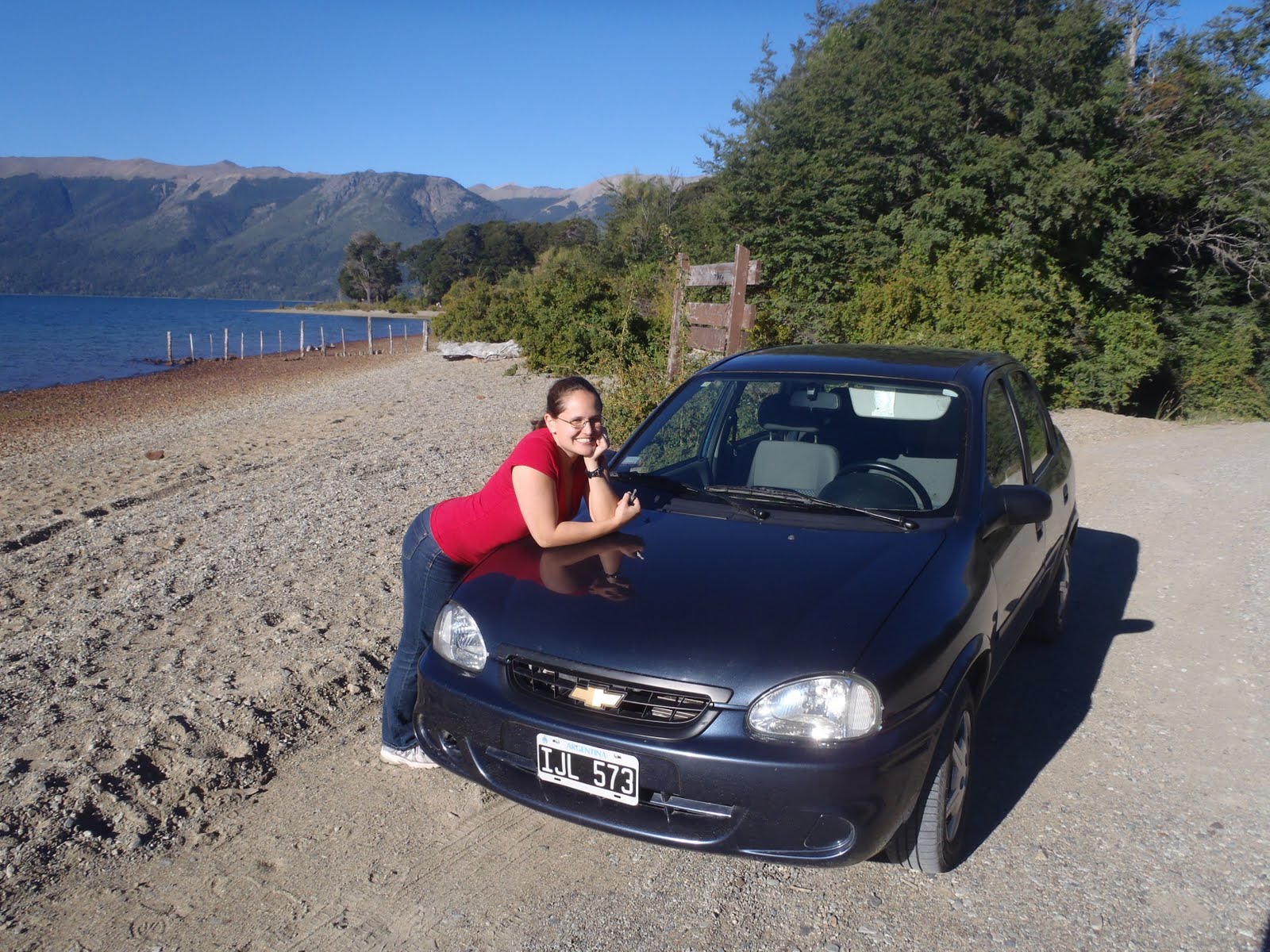
Alix with the car at Playa Negra in the national park

Our first destination was Cascada Los Alerces, a crashing waterfall set between two lakes in a beautiful mountain forest. Our first camp site found us on a tiny knoll next to a rapid flowing river; resupply of fresh, sweet-tasting water was not going to pose a difficulty here.


The tent is up!


The view from our "balcony"

In the morning, we visited the waterfall itself. Fortified by a sleep-in and a leisurely breakfast at our night camp five minutes away, we felt vastly superior to the tourists who waddled, bleary-eyed from their tour bus. After the soporific 2-hour bus ride from Bariloche they must have endured to reach the waterfall that morning, the tourists had ten minutes or so to take a photo and get back on the bus for another sleepy journey to their next postcard moment in an otherwise long, minibus-riding day. In our first vlog you can see the grumpy face of an unimpressed tourist in the background behind Alix.


From the Cascada we continued climbing up the mountain road to our main destination at Monte Tronador. Her top obscured by the autumnal clouds, this enormous spire is a deceased volcanic goddess, she is attended in death by seven retreating glaciers and a thin but spectacular waterfall with the awesome name "Garganta Del Diablo"- the Throat of the Devil.


Looking up at the "Throat of the Devil"


Surrounded by beauty

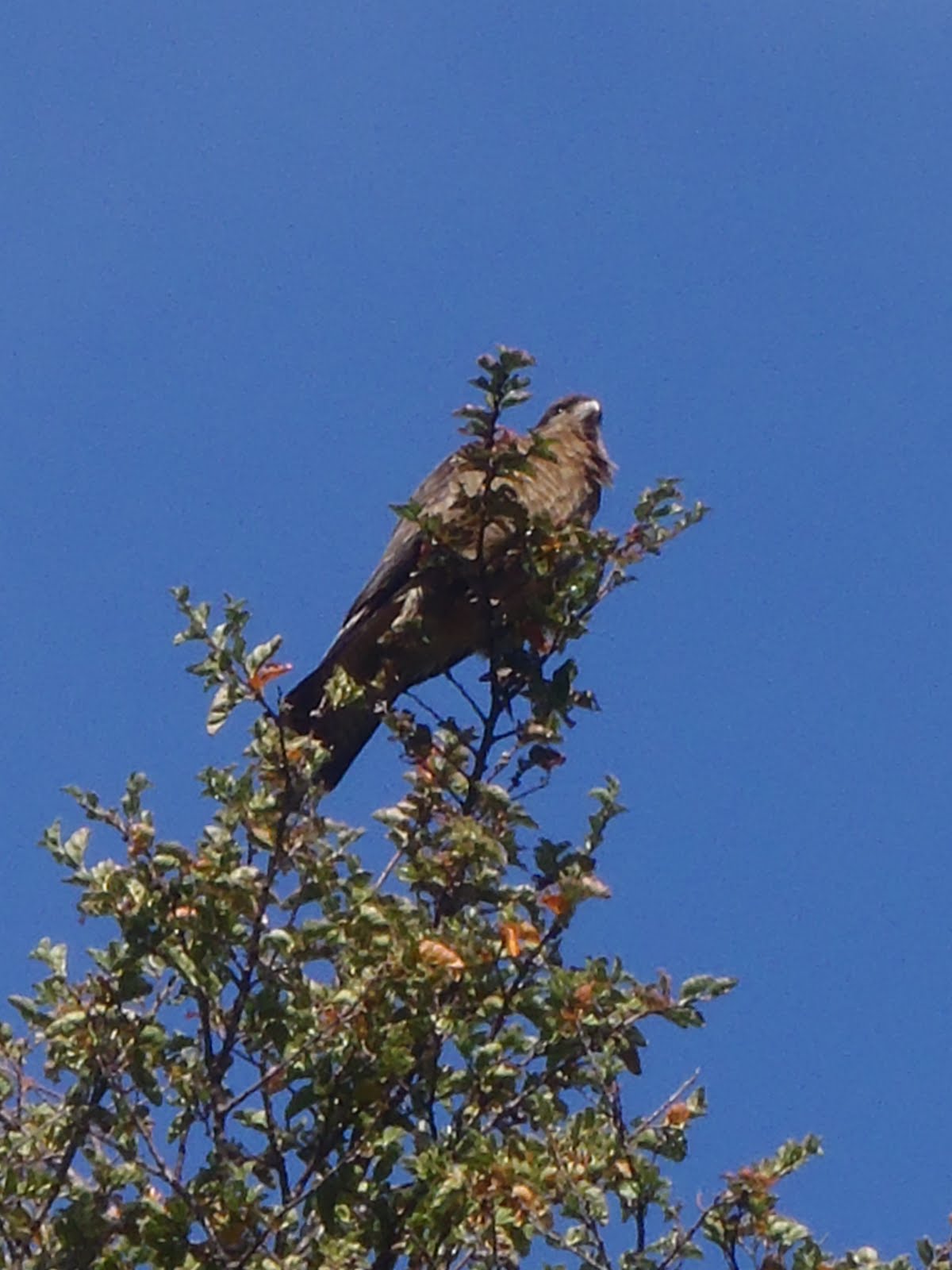
Close to the base of the mountain inclement weather is no small matter. We quickly set up camp at Pampa Linda, the base camp of Mount Tronador before the temparature dropped to a few degrees celsius and the rain began a steady, unrelenting drizzle that lasted several days. Looking down on Pampa Linda from the lookout "Mirador De Valle" the next day, a brief break in the clouds cast a rainbow across the valley and brought out the local bird of prey- a small falcon named the chimango.


Alix looks towards Monte Tronador and the sound of approaching thunder


The steep, wet hike to Mirador De Valle was worth the view and the rainbow


A chimango comes out to see the sun

After a day's slog through the rain and wind in search of picturesque beauty that was drowned in the wet we left Mt Tronador cold, hungry, damp and satisfied, in search of a warm bed and some well deserved hot food.

In retrospect, our decision to camp out in the mountains in April was driven more by ignorance than bravery, more by our desire to extend beyond minibus tourism than by a true appreciation of the conditions we would encounter. What we did learn in the majesty of the mountains is that Monte Tronador is a sleeping beauty who is not to be visited whimsically.

Monday, April 19, 2010

Observations on Argentina, Part 2

6. Maté
Everyone here seems to be on it. You see people in the hostels, on tour buses, wherever, with their maté cups (in various styles, usually gourds) with the metal straw, a thermos flask of hot water and containers of dried yerba maté and sugar (or liquid artificial sweetner, which the Argentinians also seem to love). It's caffinated, so probably addictive, which is why they're all so into it.


7. Sheets
All the hostels we've stayed in here have flat sheets instead of fitted sheets over the mattresses. Why?! Flat sheets are not long enough to get tucked in properly to the ends of the bed and always end up coming out and getting tangled up.
Fitted sheets, people. Learn 'em. Get 'em. Love 'em.

Thursday, April 15, 2010

Observations on Argentina

1. Shoes
You all (should) know that I love shoes. There are a lot of shoe stores in Mendoza with beautiful leather heels, boots, etc. and I found it very difficult to pull myself away from the windows, let alone stop myself going in the shops, while we were there. Fortunately, the Argentinians are quite boring in their shoe colours and most stores only have black, white or brown shoes, beautiful as they are.

2. Change
People seem loathe to give us change in this country. And they never seem to have any! The ATMs only dispense AR$100 notes but it is very difficult to get change for them, even after you spend AR$124 on dinner at a nice restaurant, as we did our first night in Mendoza. They had to go out to get change from AR$200.

Tasca la Plaza on the Plaza de España, where we had an awesome meal (tapas) on our first night in Mendoza

3. Sweet food
The Argentinians clearly love their sweets. Mendoza is full of pastelerías (pastry shops) serving tortas, media lunas, and lots of other pastries and cakes covered in sugar, cream and/or dulce de leche, cafés serving coffee+pastry deals for breakfast, as well as many ice cream shops and vendors on the street corners selling caramel roasted nuts, sweet popcorn and lollies of all kinds. Bariloche is full of chocolate shops, as well as pastelerías and cafés. Breakfast at the hostels consists of pastries, coffee or tea, and sweet orange cordial. Someone give me bacon & eggs, or even a roll with ham & cheese! And where can I find real OJ?!
Even the red wine is sweet. Weird.

4. Crossing the street
Only if you dare! There seem to be very few pedestrian traffic lights, so you kind of have to watch the traffic lights and guess/estimate/pray-to-God as to when the right time to cross is. It's made harder by the fact that here, the red light for cars means "if you're at the line or within 5m, you can go through... actually, make that 10m... but if you're 15m away from the line, you really should stop... maybe... unless you're really in a hurry." And don't get me started on indicating, or complete lack thereof.

5. Bowling for Bariloche
You can get handguns (and sport rifles) at the camping/fishing store. Enough said.

The Road to Mendoza

Crossing the Andes was not an experience we had considered much. We had thought about how much it would cost, what mode of travel, whether to go by day or by night, how long it would take. We thought of Mendoza, Argentina as our destination, but did not think of the crossing of the Andes as an experience itself. Perhaps we should have, because the road to Mendoza is both a geographical and historical marvel.

The first thing you notice when you approach the Andes is its highest peak; while the spine of the mountain range is a barren blade of greyish brown, a single peak is capped in white. This is Aconcagua, at 6962m above sea level she is the highest peak in the world outside of Asia and her snowmelt is one of the primary sources of the river system that runs into Mendoza.


The Andean border between Chile and Argentina is formed naturally by the Andes mountains themselves, but where exactly one country ends and the other begins has been a source of history between the two nations. Aconcagua is definitely Argentinian, because her water flows to the Argentinian side of the range, but border definitions have not always been so clear.

La Cumbre Pass is the name of the valley through which the road to Mendoza winds, a steep mountainous climb on the right side leads you to the historic monument named Christ the Redeemer of the Andes. This statue was erected in 1904 to celebrate the peaceful resolution of a border dispute between the two nations which came very close to war. If it wasn't for the efforts of a wealthy and highly religious Argentinian socialite, who arranged for the statue to be erected here, Chile and Argentina, both deeply catholic countries, may have resolved their differences by killing each other. Instead they decided to have a parade with gun salutes and lots of hugging and cheering.


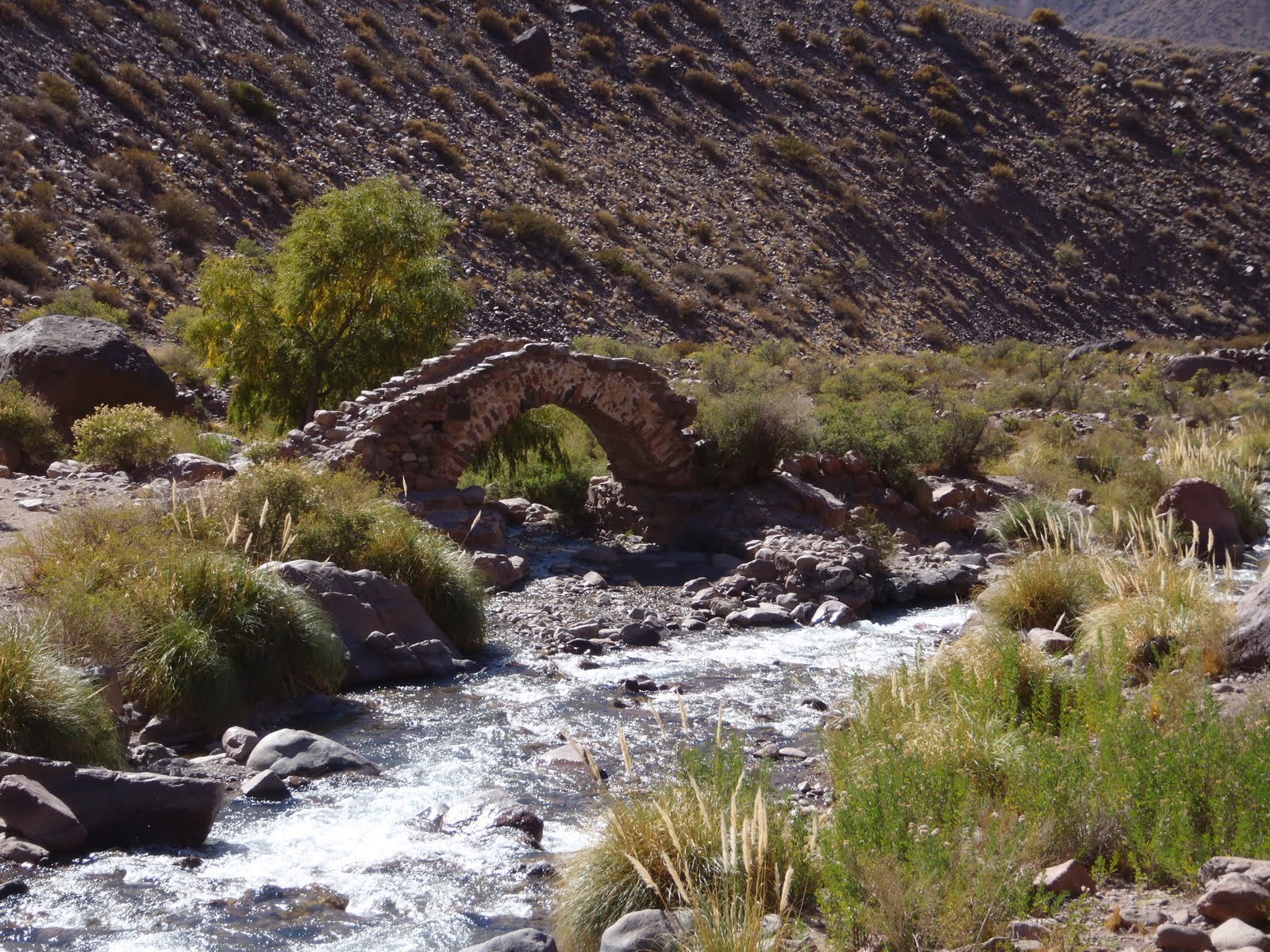
In Uspallata pass, also on the way to Mendoza, is a bridge named Picheuta. Back in 1817 a General with Republican ideas named San Martín formed an army with the intent of kicking the Spanish out of South America altogether. It was here at Picheuta that a sentry of San Martín's army first contacted the Spanish army that occupied the Chilean side of the Andes. Later, San Martín went on the liberate Argentina, Chile and Perú from Spain, San Martín is a bit of a hero to the Argentinian people in particular. A statue of Genral San Martin is found at San Martín Plaza in Mendoza, being the place where his 'Army of the Andes' was raised in the first place.

The bridge at Picheuta

Statue of San Martín in Mendoza

When your time passing through the Andes is almost done, you pass the Potrerillos dam, which dams the Mendoza river to form a large artificial lake. Mendoza has very little rainfall, but the combination of persistent sunshine from the arid climate and plentiful water supplied from the snowmelt of the Andean peaks makes for perfect conditions for growing grapevines, a fact that Mendocinos (people from Mendoza) have taken full advantage of.


Mendoza and the surrounding region supplies 80% of Argentina's wine, the vineyards are irrigated by a series of free flowing channels originally created by the Hualpa Indians of the region, and further developed by the Spanish for the agriculture of grapes, olives and lots of other fresh produce.

Mendoza is famous particularly for its Malbec wines, a variety we don't see much of in Australia. Malbec is similar to Shiraz but softer and lighter in character, and Mendoza is responsible for supplying very fine Malbecs at rediculously cheap prices when compared to Australian wine. At the Carmine Granata winery, Marina explains to us that the 2007 Cab Sav we are anjoying is selling for 18 pesos per bottle, and the Malbec for 28 pesos, or around $6-$9 Australian a bottle. For 280 pesos you can pick up a bottle of the 1999 Nicolas Granata Malbec, national and international gold medal winner and regarded by the people who decide such things as the second best Malbec in the world.

So for us, the road to Mendoza ends with a warm welcome in the form of some of Argentina's finest wine and food, the only tinge of sadness being that almost none of the wine here is exported to Australia. We will have to drink enough of it while we are here.

Jace wonders if he can fit the barrel in his pack. Scrap the pack, just take the barrel!

Meanwhile, Alix enjoys as much as she can

The fabulous spread at Casa de Cuno ends our tour of the Mendoza wine region